Some events are remembered for the speakers.
Some for the conversations.
And some for the way they make an entire room rethink how learning should feel.
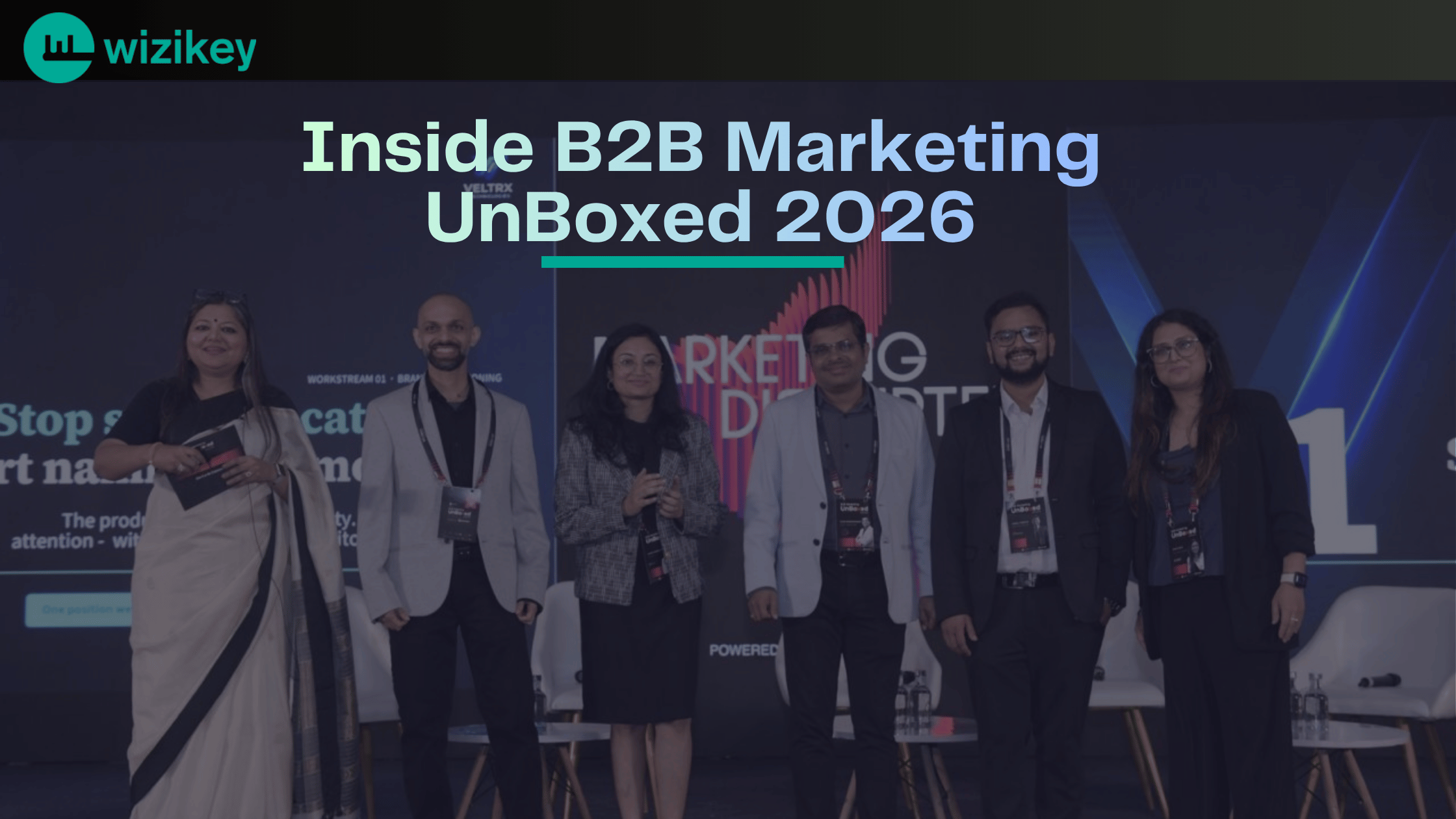
For us, B2B Marketing UnBoxed 2026 was all three.
This year, Wizikey was part of the event in a few different ways.
Aakriti was on stage as part of a workshop. Our team met marketers, founders, CMOs, and communications leaders at the Wizikey booth.
And yes, our fidget made another appearance.
From the outside, that might sound like a familiar event checklist.
Booth. Speaker. Giveaway. Conversations.
But what stayed with us was not just the presence. It was the pattern.
The questions in the room were changing. More teams were talking about AI visibility, brand discovery, and where buyers find them first.
Quick answer: What did B2B Marketing UnBoxed reveal about AI visibility?
B2B Marketing UnBoxed 2026 showed that marketing and communications teams are moving beyond the old visibility question: “Did we get covered?” The new question is sharper: “When buyers ask AI about our category, do we show up, get cited, and get recommended?”
This is why AI visibility is becoming a serious marketing and reputation priority.
The format felt different
A lot of conferences follow a familiar rhythm.
Panel. Keynote. Fireside chat. Repeat.
B2B Marketing UnBoxed did not feel like that.
The event leaned into a different kind of learning.
There were debates that made people question their own assumptions. Workshops pulled the audience into the problem instead of talking at them. Live formats showed that learning does not have to feel stiff to be useful.
The format became part of the message. That stood out.
As communicators and marketers, we spend so much time thinking about how to tell better stories. The event was also a reminder that we should spend just as much time thinking about how to design better conversations.
Not just what people hear. But how they participate.
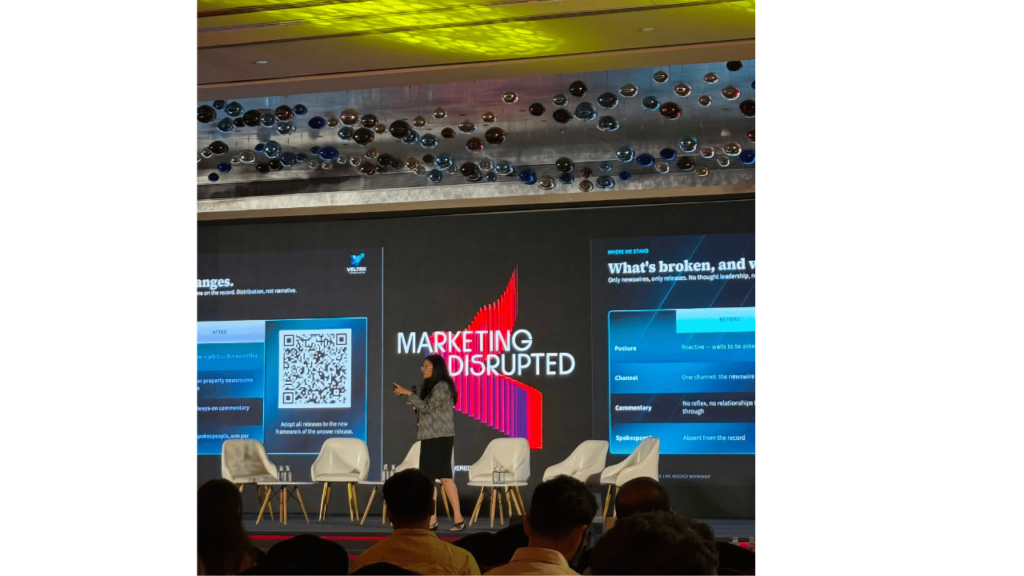
Aakriti’s session and the Answer Release shift
At the event, Aakriti spoke about a shift that is becoming important for PR, marketing, and corporate communications teams.
Most announcements are still written as if only people will read them.
But that is no longer true.
In the Answer Era, AI systems are also reading, summarizing, retrieving, and repeating what brands publish.
That means every announcement now has two readers.
People.
And machines.
The press release has not disappeared. It has gained a second reader.
That is the core idea behind Wizikey’s Answer Release Framework,
a guide for CMOs and Communications Directors thinking about how announcements should be built now. The framework itself describes this shift clearly: “The release didn’t die. It just got a second reader.”
A strong announcement still needs to work for journalists, stakeholders, employees, investors, partners, and leadership teams. At the same time, it also needs to be clear enough for AI systems to understand the company, the category, the claim, the proof, and the source of truth.
That changes the job of a release.
It is not just about saying something new.
It is about saying it clearly, consistently, and credibly enough that both humans and machines can carry it forward.
The booth had its own little moment
The Wizikey booth had a steady stream of visitors through the event. Some came for conversations.
Some came for introductions.
Some came for the fidget.
Some came because they remembered last year’s fidget.
Some even had video proof that the old one was still being used.
We respect the commitment.
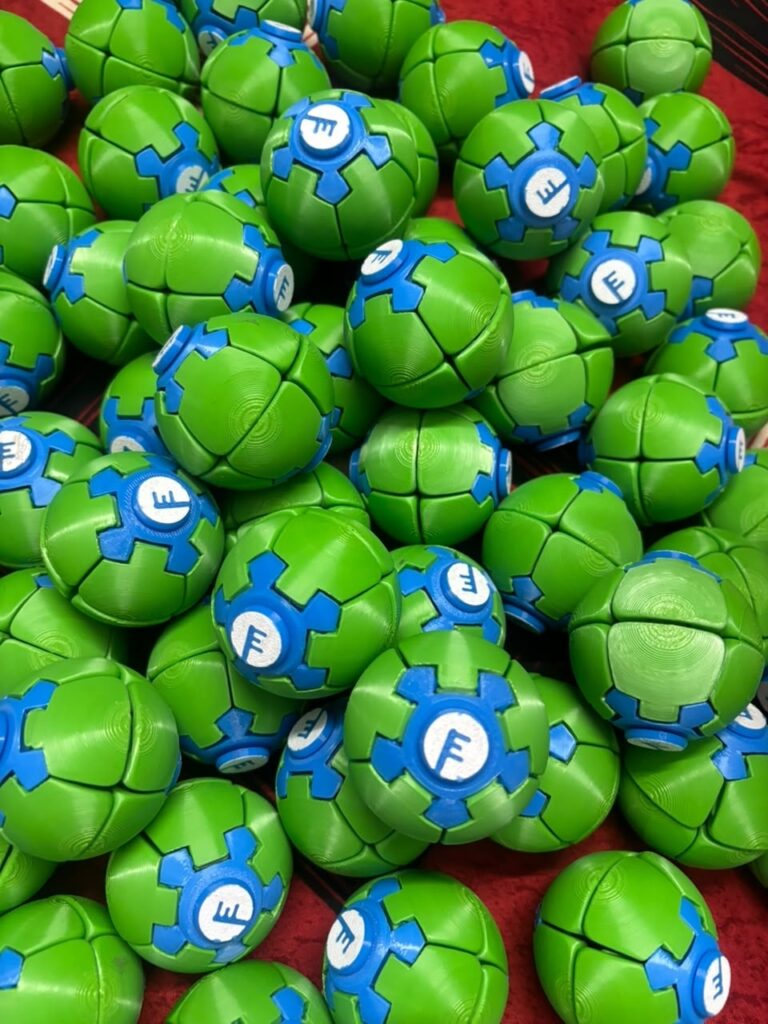
The fidget was, once again, the booth blockbuster. But this year, it had competition.
We also brought 26 Field Notes, a field report on the answer economy and what CMOs need to start paying attention to now. The guide is built from field signals and ongoing conversations with CMOs and communications teams behind more than 70 global brands.
The idea behind the report was simple.
Marketing teams are no longer asking only:
“Did we get visibility?”
They are asking sharper questions.
“We are entering a new market. Are we visible there?”
“When buyers ask AI about our category, do we show up?”
“If AI recommends a competitor, can we understand why?”
“What makes our brand easier for AI to cite and recommend?”
That was the real shift we heard at the booth.
Marketing teams are asking where buyers find them first.
And increasingly, that first place may not be a website, a search result, or a sales conversation.
It may be an AI answer.
AI visibility changes the old visibility question
For years, brand visibility was easier to frame.
- Where did we get covered?
- How much traffic did we drive?
- What did the campaign deliver?
- Which story got picked up?
Those questions still matter.
But they are no longer enough.
In the Answer Era, brands also need to understand how they are being interpreted by AI systems. Are they being cited? Are they being recommended? Are they being described accurately? Are competitors showing up more often? Which sources are shaping the answer?
That is why earned media, citations, source density, narrative accuracy, freshness, and AI share of voice are becoming leadership questions.
Because visibility is no longer only about whether your brand appeared.
It is also about whether your brand is understood.
Old visibility questions vs. new AI visibility questions
| Old way of thinking | What modern teams need to answer |
| Did we get coverage? | Did the coverage shape how AI explains us? |
| Did the campaign drive traffic? | Are buyers forming opinions before they click? |
| Are we ranking on search? | Are we cited and recommended in AI answers? |
| Did our announcement go out? | Is the announcement clear for people and machines? |
| Are competitors visible? | Are competitors being recommended instead of us? |
What teams should start tracking
The conversations at B2B Marketing UnBoxed pointed to a practical shift.
Marketing and communications teams need a way to understand how their brand appears across the places buyers and AI systems trust.
That means tracking:
- Where the brand is mentioned
- Which competitors show up more often
- Which sources are shaping AI answers
- Whether the brand is being cited accurately
- Which buyer questions the brand appears for
- Where the brand disappears from the conversation
- How narratives change across markets and platforms
In practice, this turns AI visibility into a weekly discipline, not a one-time audit.
Where Wizikey fits into this shift
Wizikey helps PR, marketing, and corporate communications teams track the signals that shape brand visibility.
That includes media mentions, competitors, sentiment, social signals, spokesperson visibility, alerts, and leadership-ready reports across markets.
As AI changes discovery, these signals matter in a new way.
They do not only show where a brand appeared.
They help teams understand what the market is starting to remember, what AI systems may be picking up, and where the brand needs stronger proof.
That is the shift Wizikey is building for.
What we brought back
We came back from B2B Marketing UnBoxed with full follow-up lists, sharper questions, and a lot of appreciation for the people who stopped by.
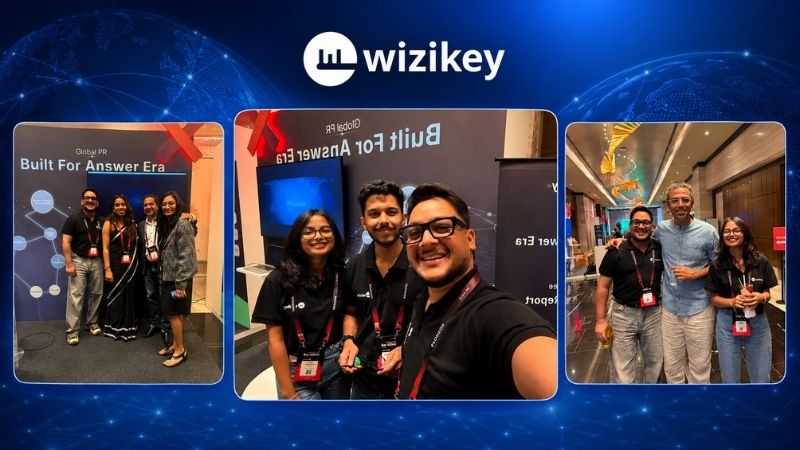
But more than anything, we came back with a stronger belief that the Answer Era is already changing the work of marketing and communications.
Announcements need to be built differently.
Coverage needs to be measured differently.
Brand visibility needs to be understood differently.
And conversations with buyers may begin much earlier than most teams realize.
A heartfelt thank you to the Mavens community and the team behind B2B UnBoxed, especially Kaustubh (KC), Ankur Saigal, Amit Thapliyal, Udit Agarwal, Anjali Gupta, Bharati Sudhir, Praval Singh, and the BambooBox team.
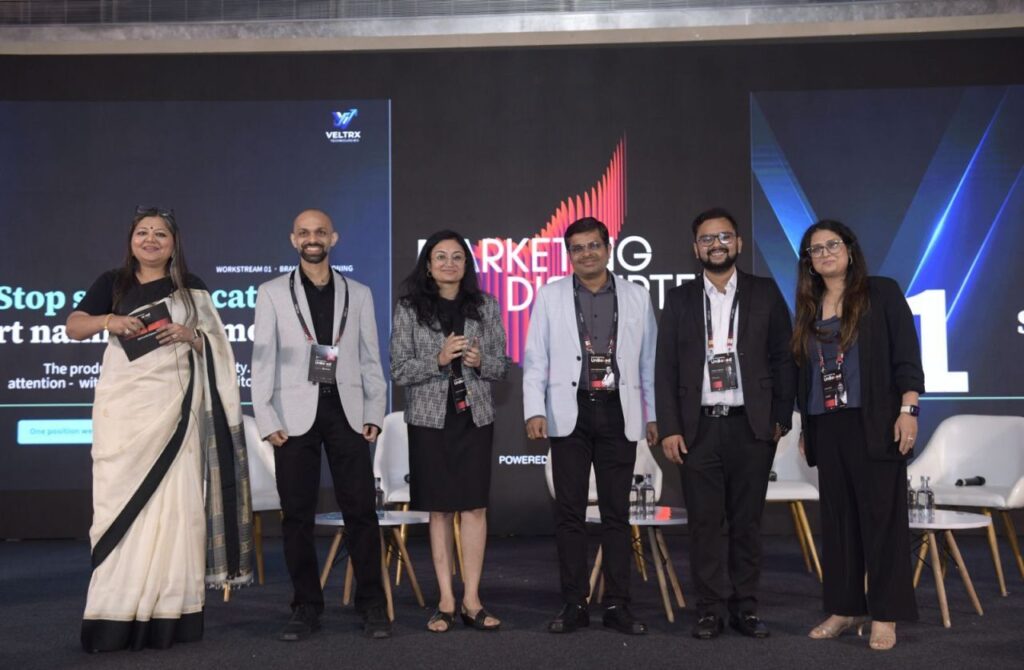
It takes courage to move beyond tried-and-tested formats, and even more courage to keep raising the bar every year.
A big thank you as well to everyone who stopped by the Wizikey booth, picked up a fidget, asked a question, shared a perspective, or gave us one more reason to keep building for the Answer Era.
We came back grateful.
A little nostalgic.
And very ready for the conversations ahead.
FAQs
What is AI visibility?
AI visibility is how often, how accurately, and in what context a brand appears in AI-generated answers. It includes whether the brand is cited, recommended, compared with competitors, or left out when buyers ask AI tools about a category, market, product, or business problem.
Why does AI visibility matter for CMOs?
AI visibility matters because buyers may now form opinions before visiting a website or speaking to sales. If AI tools recommend a competitor, cite stronger third-party sources, or describe a brand inaccurately, marketing teams need to know early enough to respond.
What is the Answer Release Framework?
The Answer Release Framework is Wizikey’s guide for building announcements that work for both people and machines. It helps CMOs and communications directors think about clear facts, consistent language, third-party proof, machine-readable structure, and human voice in every announcement.
What are 26 Field Notes?
26 Field Notes is Wizikey’s field report on the answer economy. It captures signals from conversations with CMOs and communications teams across global brands, focusing on how AI visibility, earned media, citations, buyer questions, narrative accuracy, and competitor recommendations are changing marketing.
How should marketing teams start measuring AI visibility?
Marketing teams can start by tracking the buyer questions that matter most, running those questions across AI engines, checking whether the brand appears, identifying which competitors are recommended, and reviewing the sources shaping those answers. The key is to measure this regularly, not once.
The takeaway
B2B Marketing UnBoxed 2026 reminded us that the format of learning is changing.
So is the format of discovery.
Buyers are not only searching, clicking, and reading in the old sequence anymore. They are asking questions, comparing options, and forming opinions through AI answers.
For marketing and communications teams, that changes the work.
The next visibility question is not just:
“Did we appear?”
It is:
“When buyers ask, are we understood?”
Written by the Product & Media Intelligence Team at Wizikey.