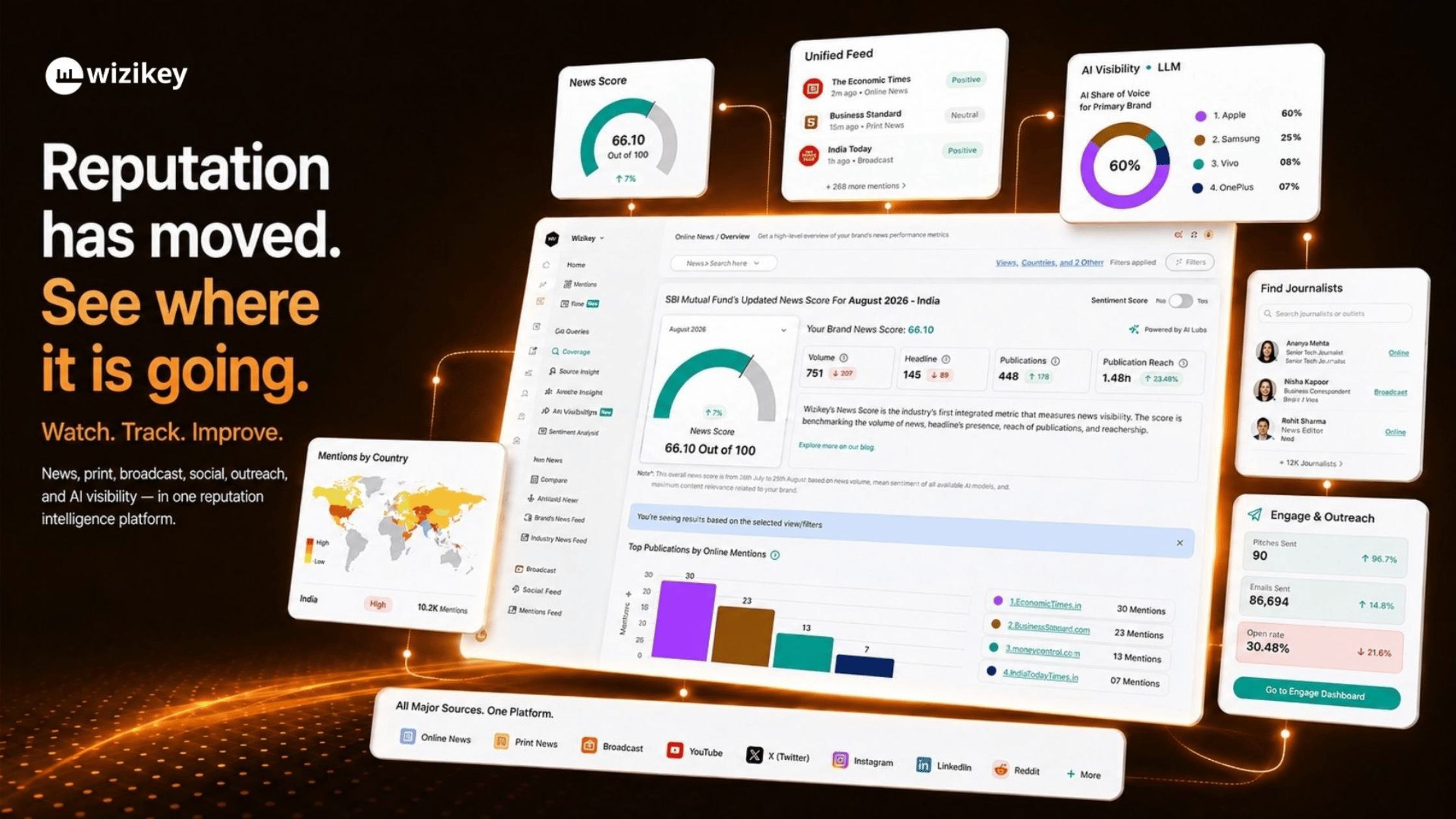
Reputation used to be easier to locate.
Today, a reputation intelligence platform is becoming essential for PR and Corporate Communications teams because reputation is no longer shaped in one place. It now moves across news, print, broadcast, social conversations, competitors, markets, and AI answers.
For a long time, PR and Corporate Communications teams had a clearer map. A business daily carried the announcement. A trade publication explained the category. A TV mention gave the story public visibility. A press clipping captured what appeared.
The work was not simple, but the central question was clearer:
Where did we get covered?
That question is no longer enough.
Why reputation is harder to track now
Old channels have not disappeared.
News, print, broadcast, and trade media still matter. However, they are now part of a much larger reputation system.
What has changed is the speed and spread of reputation signals.
Earlier, those signals were fewer and slower. They were also easier to trace.
Now, they move quickly across many public channels. In addition, AI tools increasingly summarise and interpret those signals for people.
A buyer may first understand your brand through a market story.
Meanwhile, investors may notice your competitor being quoted more often. Journalists may see which company owns the category narrative.
A board member may ask why a negative mention is gaining attention.
Customers, on the other hand, may trust a social conversation more than a campaign line.
And increasingly, people are asking ChatGPT, Gemini, Claude, or Perplexity which brands lead their category.
As a result, part of your reputation may already be formed before someone reaches your website.
That is the shift from media monitoring to reputation intelligence.
“Communications teams are no longer only asked where the brand was covered. They are being asked what the coverage means, how perception is moving, and what leadership should know next. That is the shift Wizikey is built around.”
Aakriti Bhargava, Co-founder, Wizikey
Reputation is no longer something PR teams monitor only after it appears.
Instead, teams need to understand how it moves across media, social conversations, competitors, markets, and AI answers.
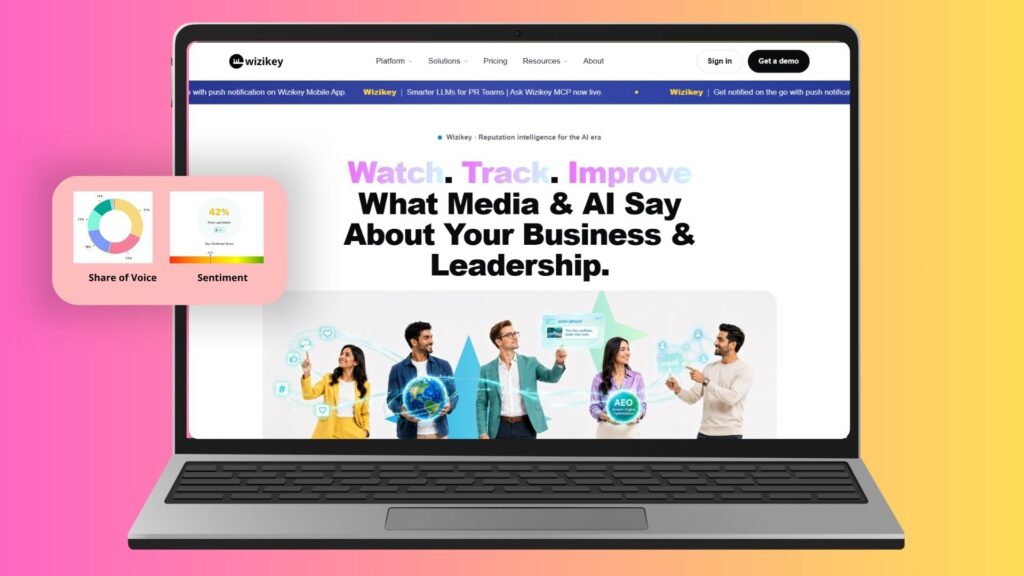
Wizikey’s new website is built around this reality. It brings reputation movement into one connected view.
Therefore, teams can watch it, track it, improve it, and prove it.
Quick answer: What is a reputation intelligence platform?
A reputation intelligence platform helps teams understand how their brand, competitors, leaders, and business are perceived across media, social conversations, markets, and AI answers.
It does more than collect mentions.
It connects signals across news, print, broadcast, social, competitors, and AI engines. This helps PR, Corporate Communications, Marketing, and Leadership teams understand what changed and why it matters.
Teams can then decide what needs action and how to report it clearly.
In simple terms: reputation has moved across more places. A reputation intelligence platform helps teams see that movement in one view.
Why PR teams need a reputation intelligence platform
Of course, media monitoring still matters.
PR teams still need to know where the brand was mentioned, which publication carried the story, what the sentiment was, and how much visibility the coverage received.
However, the job has expanded.
The question is no longer only:
Did we get covered?
Modern teams also need to know:
- Which stories actually shaped perception?
- How are competitors showing up?
- Is a topic gaining momentum?
- Are AI engines describing the brand accurately?
- Which mentions matter to leadership?
- What needs a response?
- Can we prove what changed?
That is why reputation intelligence is different from media monitoring.
Media monitoring tells teams what appeared.
Reputation intelligence helps teams understand what is forming, how it is moving, and what to do next.
How reputation intelligence changes the reputation map
A brand no longer controls its reputation through its own messaging alone.
Reputation now forms through what people read, watch, share, ask, compare, and repeat.
It can take shape through:
- A front-page print story
- A broadcast mention
- A LinkedIn debate
- A Reddit thread
- A YouTube review
- A competitor comparison
- A negative mention that starts quietly and spreads quickly
- An AI-generated answer that explains your category without mentioning you
“AI is becoming another layer of brand discovery. It does not replace media, but it changes how media, social conversations, and market signals are summarized for people. That makes trusted, connected reputation data more important than ever.”
Anshul Sushil, Co-founder, Wizikey
None of these signals are new in isolation. What is new is the speed.
These signals travel faster and compound publicly. Platforms may also summarize or rank them before a brand gets the chance to explain itself.
As a result, the old monitoring model starts to fall short.
Teams may have the data but still miss the movement.
The question for PR has changed
The old way of thinking was built around coverage.
The new way of working is built around reputation movement.
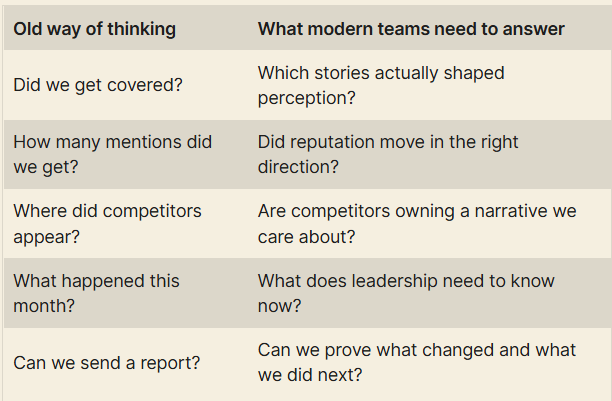
This is the real shift.
PR and Communications teams are not just being asked to collect links. They are being asked to explain reputation as it changes.
“PR teams do not need another place to check. They need a system that reduces the gap between seeing a signal, understanding why it matters, and deciding what to do next.”
Rishi Verma, Product Manager, Wizikey
The Wizikey lens: Watch. Track. Improve. Prove.
A reputation intelligence platform should not stop at showing what happened.
Instead, it should help teams see where reputation is forming, understand how it is moving, act when the story changes, and prove the impact to leadership.
That is the Wizikey lens:
Watch it. Track it. Improve it. Prove it.
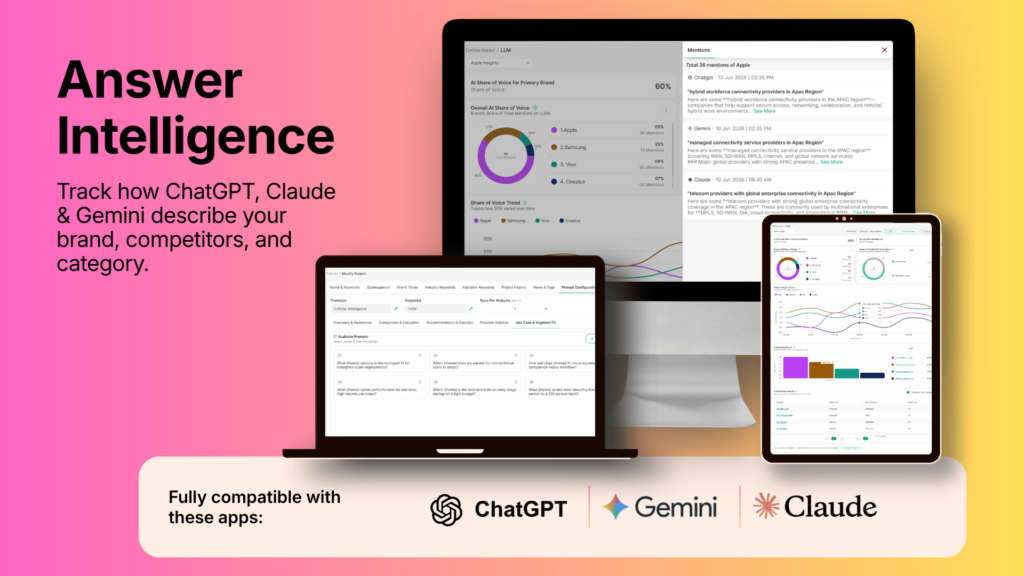
Watch: See media and AI answers across markets in one view
First, teams need to see where reputation is forming.
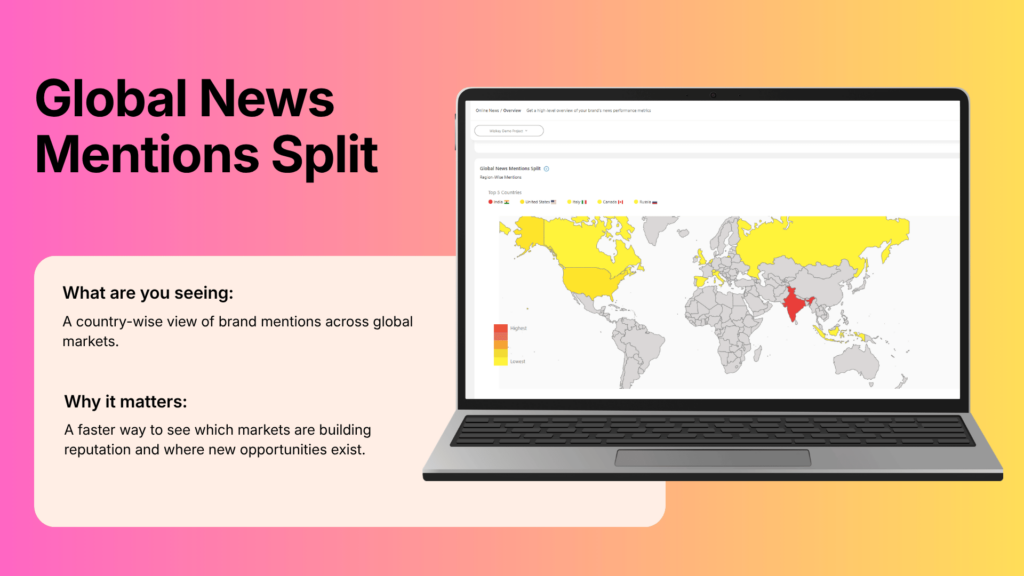
Wizikey helps teams monitor what media and AI say about their business, brand, competitors, and leadership across news, print, broadcast, social conversations, and AI answers.
That includes answers from ChatGPT, Gemini, Claude, and Perplexity, along with media sources across 100+ countries.
So instead of checking separate tabs for coverage, social chatter, broadcast updates, competitor mentions, and AI visibility, teams can start with one connected view.
The point is not more monitoring.
The point is knowing where reputation is forming before someone else asks.
Track: Follow News Score, sentiment, reach, and share of voice over time
Next, once teams can see the signals, they need to understand movement.
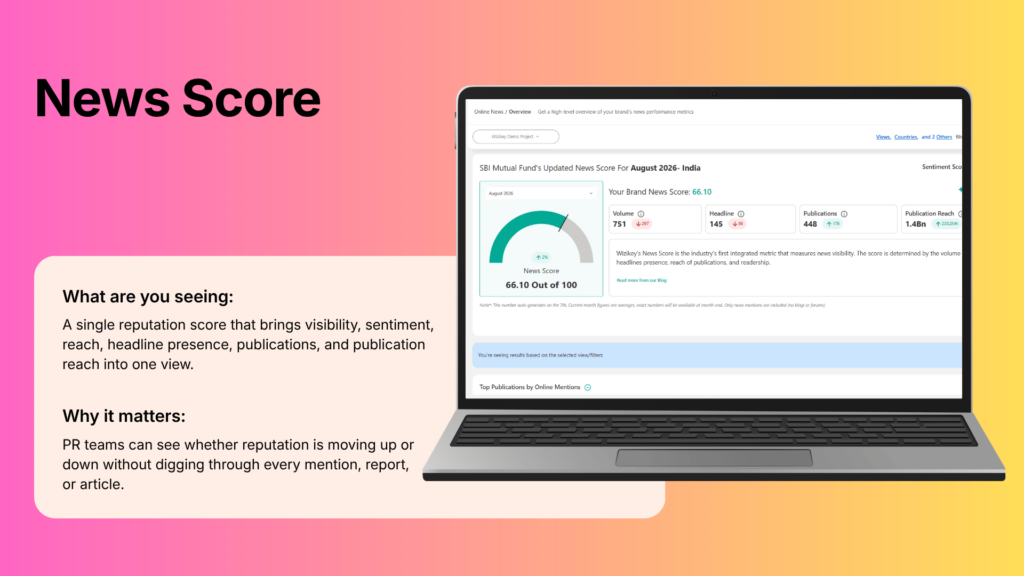
Wizikey’s News Score helps teams track reputation as a number over time.
It is supported by signals such as visibility, reach, sentiment, prominence, share of voice, and competitive position.
This helps teams answer sharper questions:
- Did visibility improve?
- Did sentiment shift?
- Are competitors gaining ground?
- Are AI engines describing us accurately?
- Can we explain this in a board meeting?
Reputation cannot remain a loose collection of links.
It needs to be tracked as movement.
Improve: Act before the story moves further
More importantly, reputation intelligence cannot stop at reporting.
A negative mention may need review.
A sudden spike may need escalation.
A competitor narrative may need a counter-story.
A journalist may need context.
Leadership may need a brief before the next meeting.
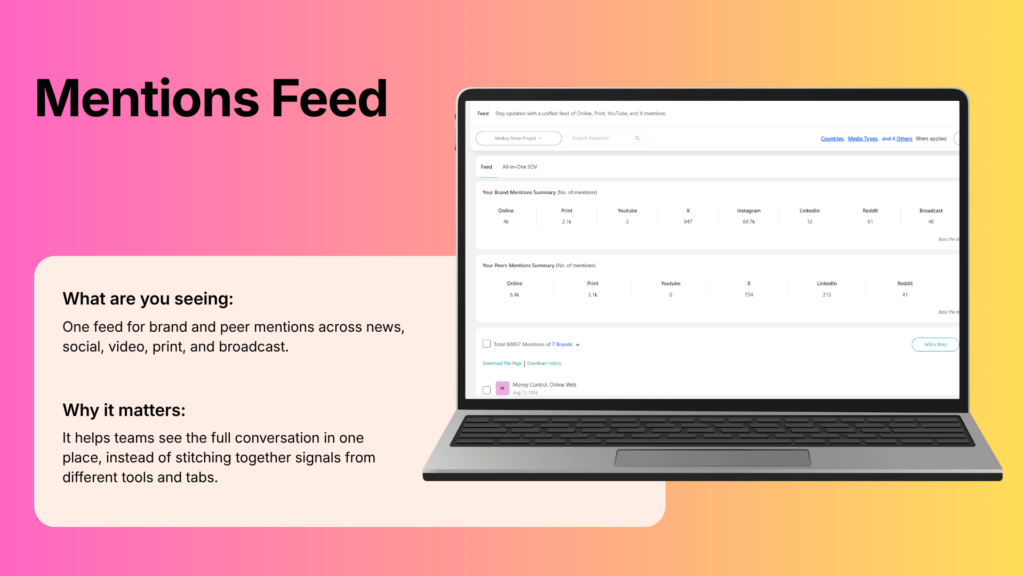
Wizikey helps teams move from signal to action through real-time alerts, media intelligence, journalist discovery, outreach, campaign tracking, and team-wide visibility.
Do not just find out what happened.
Act while it is still moving.
Prove: Turn movement into leadership-ready reporting
Finally, the job is proof.
Coverage, sentiment, reach, share of voice, campaign lift, leadership visibility, and competitor movement all matter.
However, when teams report them separately, leadership may not see the full story.
Wizikey helps teams turn reputation movement into leadership-ready reporting.
What this means for communications teams
For PR and Corporate Communications teams, this creates a more connected operating rhythm:
- Monitor media and AI signals in one place
- Track News Score, sentiment, reach, and share of voice over time
- Spot negative mentions, spikes, and competitor movement early
- Act through alerts, outreach, and team visibility
- Report what changed in a way leadership can understand
This reduces the gap between spotting a signal and deciding what to do next.
What leadership gets from the same view
The same reputation data can help different teams in different ways.
CEOs, for example, can track reputation more easily as a business indicator.
CMOs can use campaign lift, share of voice, and competitive position to explain the value of earned media.
Meanwhile, Corporate Communications teams can bring print, TV, digital, social, and AI answers closer together.
CFOs and Procurement teams can also evaluate communications more clearly because activity, movement, and reporting sit in one system.
Therefore, the strongest reputation systems do not end with dashboards.
They help teams walk into reviews with the movement, context, and action already clear.
What teams often miss
Reputation intelligence is not only about adding more sources.
The real issue is whether teams can tell which signals matter.
Not every mention carries the same weight
A brand may receive hundreds of mentions in a month, but not all mentions carry the same value.
For example, a small negative signal in the wrong publication may need attention faster than a large volume of low-impact coverage.
Likewise, a competitor may not have more mentions, but may still be winning a topic that matters to the category.
An AI answer may also leave your brand out, even when your media coverage suggests it should appear.
Therefore, setup matters.
A good reputation intelligence setup should help teams track:
- Brand, competitor, and leadership mentions
- Share of voice, reach, and sentiment movement
- Negative mentions, spikes, and crisis signals
- AI answers and brand interpretation
- Campaign lift and News Score movement
- Leadership-ready reporting across markets
Without that structure, teams may still have dashboards but miss the story.
How Wizikey works as a reputation intelligence platform
Wizikey brings reputation movement into one connected view.
It helps teams watch what media and AI say about their business, track reputation through News Score and competitive signals, improve the story through alerts and outreach, and prove the impact through leadership-ready reporting.
As a result, the new website reflects this broader platform story.
It is built for teams that are expected to answer sharper reputation questions:
- What changed?
- Where did it move?
- Who shaped the narrative?
- Are competitors gaining ground?
- What are AI engines saying?
- What should we do next?
- Can we prove it to leadership?
That is the shift from scattered monitoring to reputation intelligence.
FAQs
What is a reputation intelligence platform?
A reputation intelligence platform helps teams monitor and understand how their brand is perceived across media, social conversations, competitors, markets, and AI answers.
It connects signals like mentions, sentiment, reach, share of voice, alerts, and reports. This helps teams track reputation movement and act on it.
How is reputation intelligence different from media monitoring?
Media monitoring usually tracks where a brand was mentioned.
Reputation intelligence goes further.
It helps teams understand what those mentions mean, how competitors are moving, what AI answers say, whether sentiment is changing, and how to report the impact to leadership.
Why do PR teams need reputation intelligence now?
PR teams need reputation intelligence because reputation signals now move faster across more fragmented and public channels.
In addition, AI summaries increasingly influence how people understand brands and categories.
Traditional coverage reports can show what appeared.
Reputation intelligence helps teams understand what is moving and what needs action.
What does Wizikey help teams track?
Wizikey helps teams track brand mentions, competitors, news, print, broadcast, social signals, sentiment, AI answers, alerts, News Score movement, campaign lift, and leadership-ready reports.
The goal is to give teams one connected view of reputation movement.
How can teams prove reputation impact to leadership?
Teams can prove reputation impact by connecting coverage, reach, sentiment, share of voice, campaign lift, competitive position, and News Score movement into a clear leadership story.
Instead of sending only links or mentions, teams can show what changed, why it matters, and what they did next.
The takeaway
Reputation has moved.
Old channels have not disappeared.
Instead, reputation now moves faster across more fragmented and public spaces.
Increasingly, AI answers also influence how people interpret those signals.
The strongest teams will not be the ones collecting the most mentions.
They will be the ones that can see where reputation is forming, track how it moves, improve the story when needed, and prove the impact to leadership.
Wizikey brings that movement into one connected view.
See how your brand is being read, watched, compared, and summarized across media, social conversations, and AI answers.