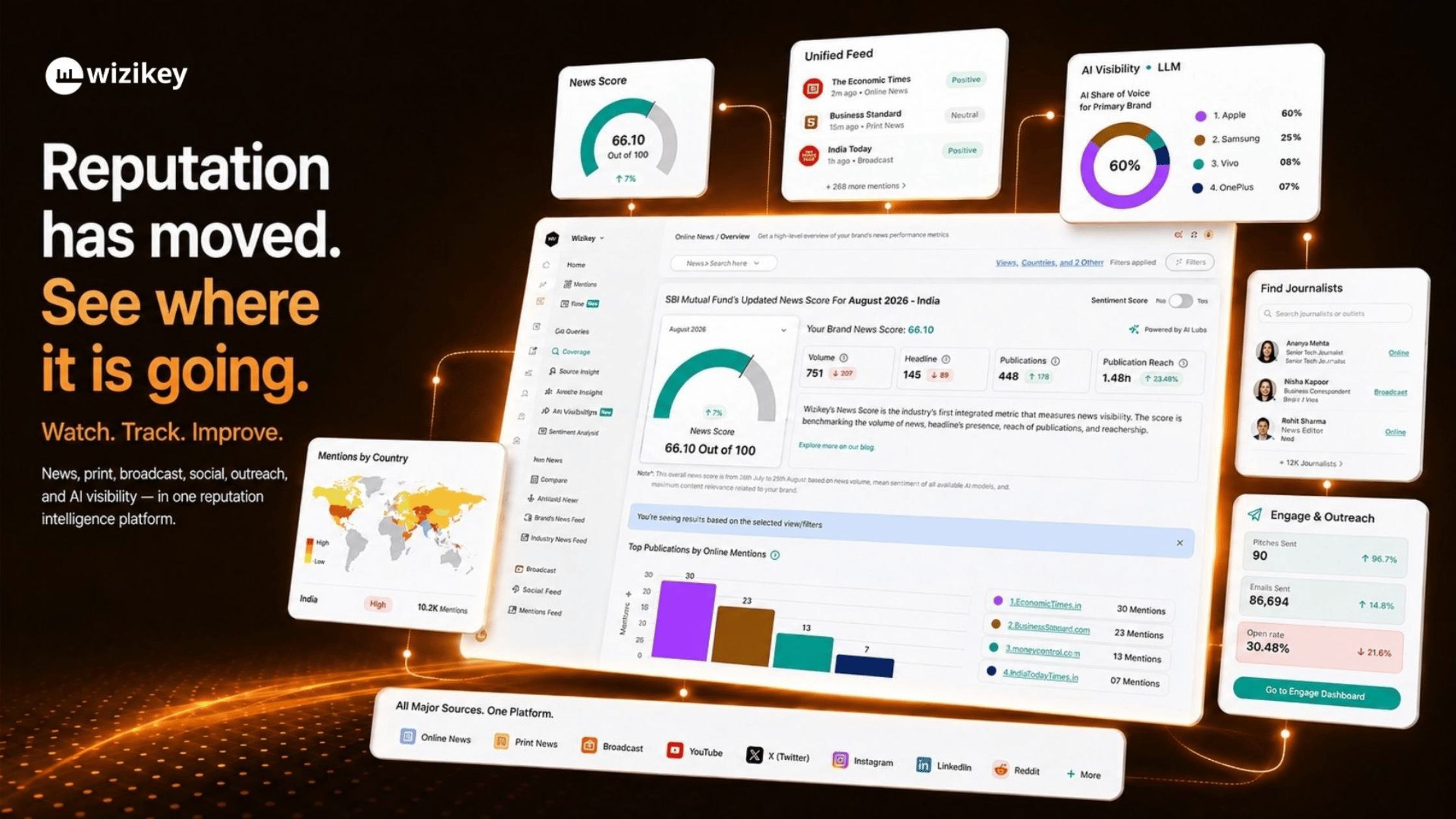
A media intelligence dashboard can give teams more control over how they see and use media data. But building the dashboard is only one part of the problem.
One global investment firm learned this firsthand.
For years, the firm used Wizikey to track what the media was saying across markets. Later, one of its portfolio companies offered another option: build a custom dashboard using technology already available within its ecosystem.
On paper, the decision made sense. The team could own the interface. It could also control how information appeared and build workflows around the way people worked.
So, the firm stopped using Wizikey and started building.
The dashboard itself was not the difficult part.
The media data underneath it was.
Building a media intelligence dashboard was the easy part
Once the dashboard was ready, the team needed to fill it with reliable media information.
That included:
- Coverage
- Publications
- Reach
- Sentiment
- Timelines
More importantly, the information had to arrive in a clean format that its own technology could use.
Initially, the team explored web scraping.
Technically, it worked. In practice, however, it created a new problem.
The scraping tool cost around $200 every month. Even then, it often returned messy web pages instead of clean, structured media mentions.
As a result, the team still had to process the information before using it.
At that point, one thing became clear:
Building a dashboard and building a reliable media intelligence layer are two very different problems.
Why web scraping was not enough
At first, scraping news from the web sounds simple.
Find a page. Extract the content. Send it to the dashboard.
However, communications teams rarely need raw web pages. They need information they can understand and use immediately.
For example:
- Which publication carried the story?
- When was it published?
- What was its reach?
- Was the mention positive or negative?
- Which market did it appear in?
- Which brand or topic did it relate to?
- Where does it fit into the wider coverage timeline?
A scraped page may contain some of this information.
That does not mean the information arrives ready for analysis.
For this firm, that difference became important. The team did not need more web pages.
It needed clean media intelligence.
So they returned to Wizikey, but not for another dashboard
This is where the story changed.
The firm came back to Wizikey. However, asking the team to abandon what it had already built would have defeated the purpose.
After all, the team liked its dashboard.
It wanted to keep the interface, workflows, and internal setup.
So Wizikey took a different approach.
Instead of replacing the dashboard, Wizikey connected to it.
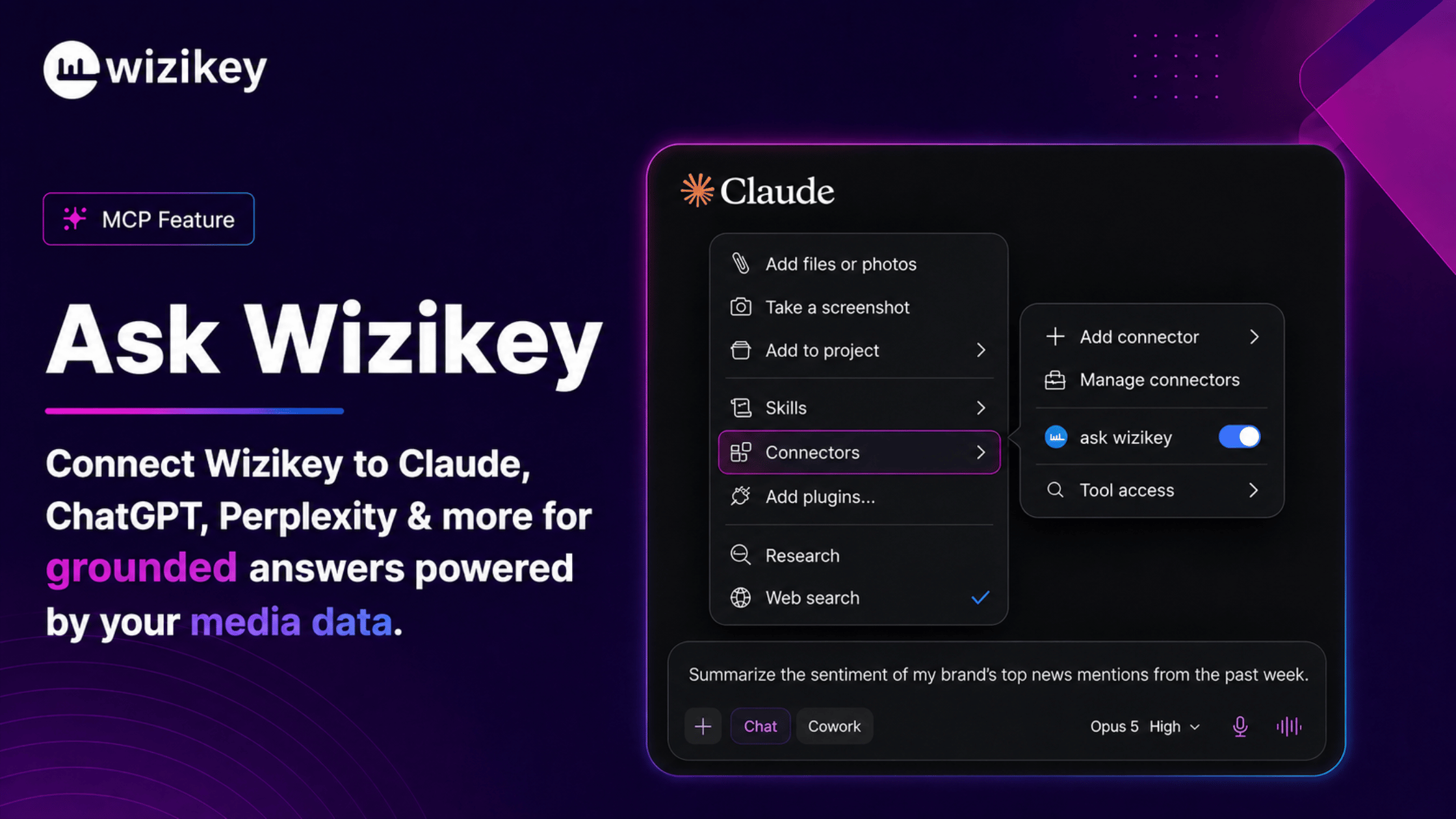
Through Ask Wizikey MCP, the firm’s own system could access Wizikey’s media intelligence directly.
The dashboard remained theirs. So did the user experience and workflows.
Wizikey simply became the intelligence layer underneath.
In other words, the firm kept what it had built while gaining access to cleaner media information.
What changed once the media intelligence dashboard connected to Wizikey
Once connected, the firm’s dashboard could pull the media information it needed without maintaining a separate scraping stack.
For example, it could access:
- Coverage
- Publications
- Reach
- Sentiment
- Timelines
The information came through Wizikey’s media intelligence layer. As a result, the team could use it more easily inside its own system.
The outcome was straightforward:
Around $200 saved every month.
No scraping tools to maintain.
Clean, verified media mentions instead of messy scraped pages.
One dashboard built around the team’s own workflow.
More importantly, the firm now had a dependable media data source for whatever it chose to build next.
The lesson is not build versus buy
It would be easy to describe this as a classic build-versus-buy story.
But that misses the point.
The firm was right to build the experience it wanted. Its internal team understood its workflow better than anyone else.
The problem only appeared when it tried to rebuild every layer underneath that experience as well.
That distinction matters.
Today, businesses have more ways to build their own tools. AI assistants, custom dashboards, and internal workflows make this easier.
However, owning the interface does not mean a team also needs to recreate every data source behind it.
Sometimes the better architecture is much simpler:
Build the experience. Connect the intelligence.
That is exactly what happened here.
Ask Wizikey MCP changes where Wizikey can sit
Traditionally, teams use a media intelligence platform by logging into the platform itself.
The interface belongs to the product, and users work inside it.
MCP creates another possibility.
The Model Context Protocol is an open standard designed to let AI applications connect with external tools and data sources. The protocol continues to evolve, including a major 2026 specification update focused on reliability, routing, authorization, and scalability.
With Ask Wizikey MCP, Wizikey can sit underneath tools a company already uses or builds. Wizikey’s current product supports connecting media intelligence to AI assistants and returning answers backed by the user’s Wizikey data.
That means a team could ask questions such as:
- Show me our latest media coverage
- Pull the publications covering this topic
- Compare coverage across markets
- Show sentiment over the last month
- Give me the timeline of this story
The experience can stay inside the company’s own environment.
Meanwhile, Wizikey provides the media intelligence underneath.
That changes the role of the platform.
It is no longer only a destination. It can also become part of the infrastructure.
When does this approach make sense?
This model works especially well when a team already has a media intelligence dashboard, internal AI assistant, reporting system, or custom workflow. Instead of replacing those tools, the team can connect reliable media information directly into them.
For organisations with strong internal technology capabilities, that can create a more natural workflow.
What the investment firm kept
The firm did not give up the thing it cared about most: control.
Its dashboard still looked and worked the way the team wanted. Users could continue with the same interface and workflow.
At the same time, the organisation decided what information appeared and where it appeared.
Meanwhile, Wizikey stayed mostly invisible underneath, supplying the media intelligence the dashboard needed.
What it no longer had to build
At the same time, the firm no longer had to solve every media-data problem itself.
Maintaining a scraping tool was no longer necessary. Messy web pages also did not need to be cleaned before the team could use them.
More importantly, the underlying media intelligence layer was already available through Wizikey.
That made the setup simpler:
Their technology on top.
Wizikey intelligence underneath.
The bigger shift: software is becoming more composable
This case points to a wider change in enterprise software.
Today, teams do not always want one platform to control the full experience. Instead, they want to combine internal tools with specialist capabilities from trusted platforms.
For example, a company may use:
- Custom interfaces
- Internal workflows
- AI assistants
- Reporting systems
- Specialist data from trusted platforms
This approach gives teams more flexibility.
As a result, they can build what is unique to their organisation and connect the capabilities they do not need to recreate.
For communications teams, media intelligence can be one of those connected capabilities.
The takeaway
The firm originally left Wizikey because it wanted to build its own experience.
Later, the team realised that owning the interface did not mean rebuilding every layer beneath it.
Its dashboard stayed. The workflow stayed. So did the technology the team had created.
What disappeared was the need for a separate scraping tool.
Instead, Wizikey became the media intelligence engine underneath the experience.
Build what makes your workflow unique. Connect the intelligence you do not need to rebuild.
Explore ASK Wizikey MCP.