Enterprise buying rarely looks the way it’s shown in sales playbooks.
There isn’t one decision-maker.
There isn’t one meeting that seals the deal.
And there’s almost never a straight line from demo to approval.
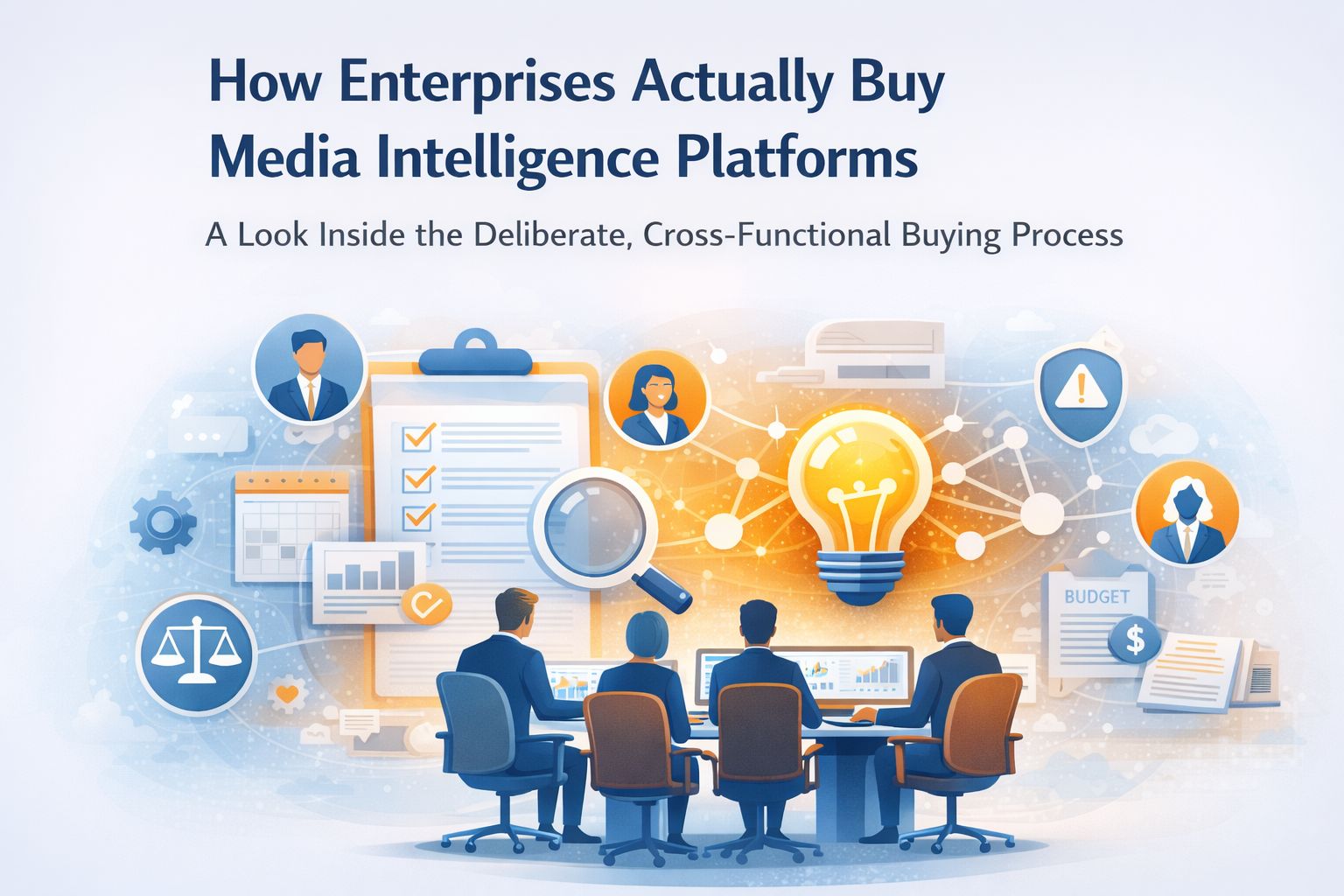
For teams evaluating media intelligence platforms, the buying process is usually cross-functional, deliberate, and risk-driven. And that’s not a problem — it’s a sign of maturity.
Why Enterprise Buying Feels Slow (But Isn’t Broken)
In early conversations, buying often feels simple.
One team identifies a gap. A solution is shortlisted. Interest is clear.
Then reality sets in.
More stakeholders get involved.
More questions surface.
Timelines stretch.
This isn’t hesitation. It’s due diligence.
For enterprise teams, media intelligence touches:
- Brand and reputation
- Leadership visibility
- Risk and compliance
- External perception across markets
Decisions that affect these areas are rarely made quickly — nor should they be.
Media Intelligence Is Not a Single-Team Decision
Unlike point tools, media intelligence platforms are rarely owned by just one function.
Depending on the organization, stakeholders often include:
- Corporate Communications or PR
- Brand or Marketing leadership
- Legal or Compliance teams
- CXO offices
- Sometimes Investor Relations or Risk teams
Each group evaluates the platform through a different lens:
- Insight and narrative clarity
- Risk exposure and escalation
- Reporting credibility
- Long-term reliability
Alignment across these perspectives takes time. That time isn’t friction — it’s alignment.
The Real Stages of Enterprise Buying (That Rarely Appear on Slides)
In practice, enterprise buying often moves through stages like these:
- Problem recognition
A gap in visibility, insight, or reporting becomes clear. - Internal validation
Teams sanity-check whether this problem is shared or isolated. - Solution exploration
Platforms are evaluated for approach, not just features. - Stakeholder alignment
Different teams assess impact, risk, and relevance. - Process and approval
Budget, procurement, legal, and timelines come into play. - Confidence building
The final question becomes: Is this a safe, long-term decision?
None of these stages can be skipped without increasing risk.
Why “One More Meeting” Is Often a Good Sign
Multiple meetings are often misread as indecision.
In reality, they usually signal:
- Growing internal buy-in
- Wider stakeholder involvement
- Serious consideration
Enterprise teams don’t invest this level of time unless the solution matters.
The absence of questions is more dangerous than the presence of many.
Risk, Not Features, Drives Final Decisions
At scale, buying decisions are rarely feature-led.
They are driven by:
- Confidence in insight quality
- Trust in the platform’s stability
- Assurance that blind spots are reduced, not increased
- Comfort that leadership visibility is handled responsibly
This is especially true for media intelligence, where misinterpretation can be as risky as lack of data.
What Mature Buyers Understand
Experienced enterprise teams know that:
- Speed doesn’t equal clarity
- Deliberation doesn’t mean disinterest
- Alignment reduces regret
Taking time upfront often saves far more time — and risk — later.
The Takeaway
If buying media intelligence feels complex, it’s because it is.
Cross-team discussions, multiple approvals, and extended timelines aren’t signs of friction — they’re signs of responsible decision-making.
For enterprise organizations, the goal isn’t to buy fast.
It’s to buy right.
And that process, when done well, is worth the time it takes.